

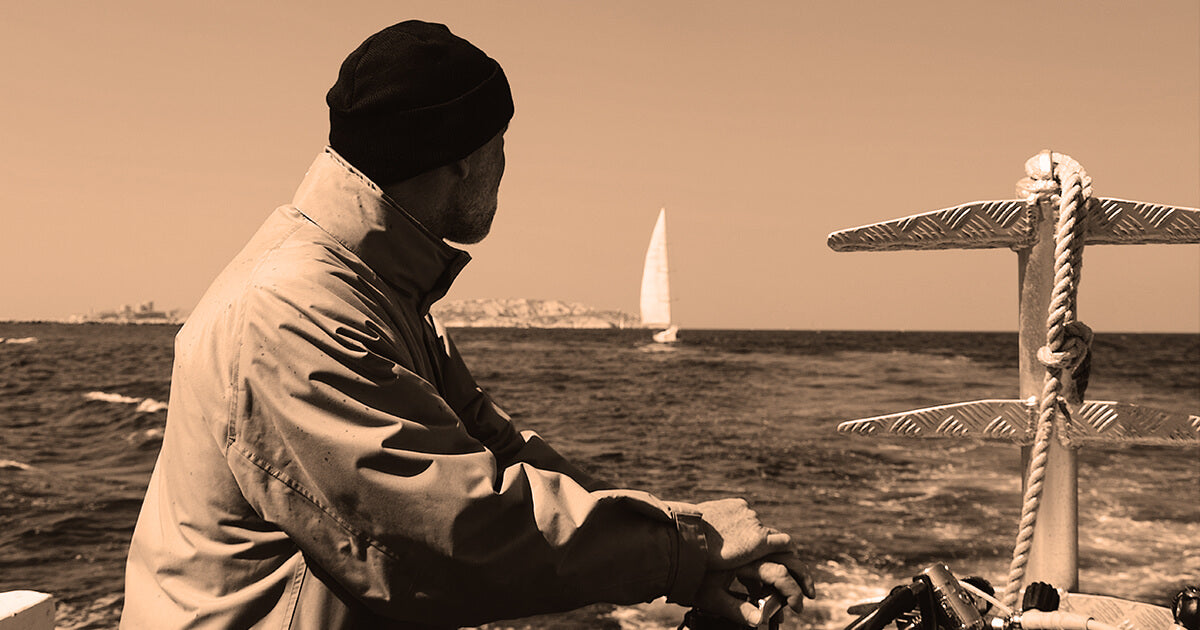
Meetings with sea captains always amaze us. Their wisdom and unique atmosphere are especially inspiring. They are like their own nation, united by the unusual way of life at sea. Most interesting are their stories related to marine beliefs and sailor superstitions that have guided life on board for centuries.
Today, owners of modern yachts, who sail around the world and soak up the cosmopolitan culture along European and global coasts, probably no longer rely on old sayings. But we believe that deep down, they too are inclined to indulge in the romance of sea stories. And the reason for this lies in the immense love for the sea, which occupies a large place in the heart of everyone who owns a motorboat, yacht, or catamaran.
We decided to collect five of the strangest sailor superstitions we have heard or read about. They deserve to remain in our memory, even if only some of them have a practical explanation. Some of them are completely incomprehensible to the modern person, but others are worth keeping as a tradition.
Do not start building a boat, launch a boat, or set off on a journey on a Friday!
Since time immemorial, humanity has disliked Friday as the blackest and most dreaded day of the week. The most common explanation for this is linked to the Christian religion and the crucifixion of Jesus on the cross. Another likely source of Friday's bad reputation is the fact that executions of convicts were carried out on this day in the Middle Ages.
Regardless of the origin of the superstition, it is a fact that even today, people closely associated with the sea, such as shipbuilders, captains, and fishermen, rarely undertake a new beginning on a Friday. This applies to all possible "beginnings" – building a vessel, boat repair, launching the vessel into the water, start of the sailing season, or setting off on a long journey.
And we were thinking that a weekend on the yacht should start early... Well, from now on, we will imagine starting on Wednesday.

Do not whistle on board!
Old sailors say it is bad luck to whistle on board a boat or ship. It is believed that this strengthens the wind and provokes a storm. In fact, the roots of this superstition come from earlier times, when riots broke out on board large ships, especially those carrying prisoners or slaves. The signal for an "attack" was whistling.
As often happens, a purely practical prohibition took on a mystical tinge. However, to this day, the superstition is observed on many fishing yachts and transport ships. We suspect one of the reasons is the risk of the annoying whistler being thrown overboard.
The boat's name is magical!
Once in the past, it was not customary to change the name of a boat or ship. It was believed that every vessel was recorded in the book of the God of the seas, hidden at the bottom of the ocean. If a change was necessary, every trace of the old name had to be erased.
Nowadays, buying a yacht from a previous owner is a popular practice, where the name is usually changed. This belief was more related to the identification of ships in times when proving ownership was a much more difficult task. Today, owners of yachts, boats, and ships of all sizes are duly documented, and the restriction is superfluous.
In the past, the tradition of christening a new boat or ship was quite strict, which confirms the importance of the name. A young girl was chosen as a godmother, who had to send the vessel off at the pier during its first launch into the water. It was believed that as much life as the godmother had ahead of her, so much life the ship had ahead of it.
Furthermore, in ancient times, sailors would perform a human sacrifice or offer a sacrificial animal to the God of the seas to pay for the safety of the hull. Later, civilization changed this custom, and wine was splashed against the hull instead of blood.
Even today, the first voyage of a new yacht or ship begins with a bottle of champagne smashed against the bow. The tradition from one of the most frightening sailor superstitions has acquired a more charming and symbolic character.

The cry of seagulls and gulls is good luck!
According to one of the most popular sailor superstitions, it is a bad omen to kill such a bird.
The highest form of prosperity is foretold if a seagull or gull flies over the place during the construction of a boat or ship. It is also good luck if the birds "sing" over the first launching of the boat into the sea.
The explanation for this belief is particularly simple. Where there are seagulls and gulls, there is fish. And one of the main reasons for launching a boat or ship was either war or fishing. That is why people believed that seagulls and gulls brought luck to sailors.
These birds were also a sign of nearby land and a guide for sailors before technology entered navigation. What better news than a seagull on the horizon when you are looking for a place to dock?
No one eats before or after the captain!
On board a ship, the captain is king, emperor, and supreme law. Regardless of the flag the vessel sails under, the captain is the most important person. And similar to court traditions in monarchies, no one sits at the table before the captain, and no one has the right to continue eating once he has finished.
In all likelihood, the superstition arose in order to impose discipline on board and instill respect for the hierarchy. In any case, the goal was probably achieved. This rule still exists in some parts of the world.
Preparing a yacht for the sailing season
Teak decking maintenance - some golden rules